Serving Central Florida and the Tampa Bay Region

Another Job Wells Done!
813-519-4382
Blog
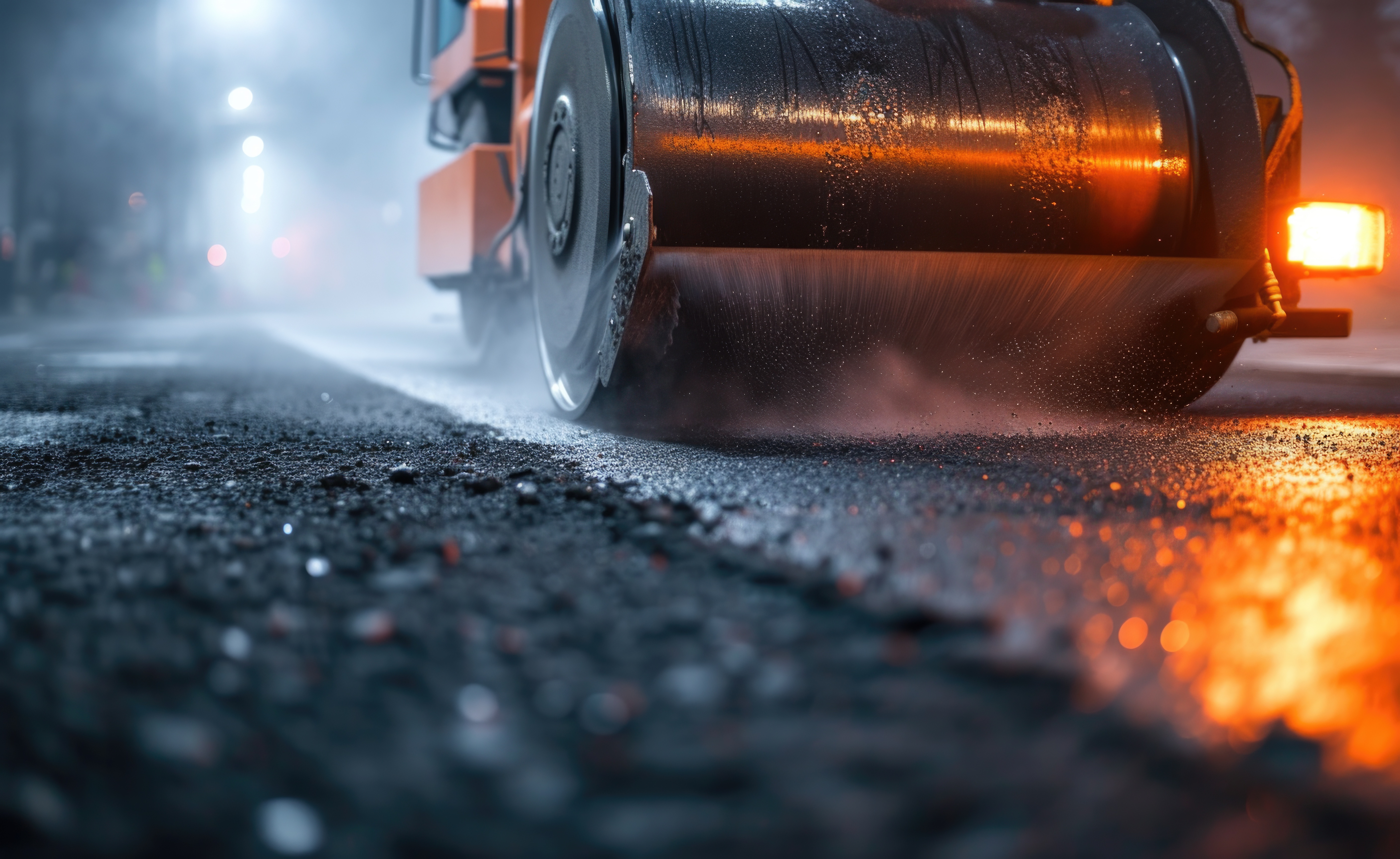
Quality Materials Matter: Hot Mix Asphalt Performance in Tampa's Extreme Heat
Reading Time: 8 minutes
When Temperature Determines Performance
Tampa Bay property owners face a unique challenge that northern climates rarely encounter: installing and maintaining asphalt pavement in conditions where ambient temperatures regularly exceed 90°F and surface temperatures can soar past 140°F. In this extreme heat environment, the type of asphalt material you choose isn't just a matter of preference – it's the difference between a driveway or parking lot that lasts 20+ years and one that fails within 5.
This guide explores why hot mix asphalt is the superior choice for Tampa's extreme heat, how it compares to cold mix alternatives, what proper installation looks like in summer conditions, and the quality control measures that ensure your paving project delivers decades of reliable performance.
Recommended Image: Paving crew installing steaming hot mix asphalt on Tampa commercial parking lot with thermometer graphic overlay showing 90°F+ temperature
Understanding Hot Mix Asphalt: Engineering for Performance
Hot mix asphalt (HMA) is produced at an asphalt plant where aggregate materials – stone, sand, and gravel – are heated to approximately 300-350°F and mixed with liquid asphalt cement. This high-temperature manufacturing process creates a homogeneous material with superior binding properties and structural integrity that cold alternatives simply cannot match.
The magic happens during the heating process. At 300°F+, the asphalt cement becomes fluid enough to thoroughly coat every particle of aggregate, creating strong bonds that persist even after the material cools. This thorough coating is impossible to achieve with cold mix alternatives.
Key components of quality hot mix:
Aggregate blend: Carefully sized stone, gravel, and sand creating a dense, interlocking structure
Asphalt cement binder: The liquid adhesive that coats and binds aggregates together
Air voids: Precisely controlled (3-5%) for proper density and flexibility
Additives: Polymers and modifiers that enhance performance in Florida's climate
Professional asphalt paving contractors select from several hot mix classifications based on your specific needs. For Tampa Bay residential and commercial properties, a two-layer or three-layer system provides optimal performance depending on traffic loads and soil conditions.
Recommended Image: Cross-section diagram showing layers of properly installed hot mix asphalt pavement with labels for surface course, binder course, gravel base, and compacted subgrade
How Hot Mix Handles Tampa's 90°F+ Temperatures
Tampa Bay's climate creates conditions that would destroy inferior materials, but properly formulated hot mix actually thrives in this environment when installed correctly.
Temperature reality in Tampa Bay:
Ambient temperatures regularly hit 90-95°F from May through September
Asphalt pavement reaches 140-160°F during peak sun exposure
Surfaces remain above 100°F for 8-10 hours daily in summer
Even winter rarely sees temperatures below 50°F
Stability Under Thermal Stress
Quality hot mix maintains structural integrity even when surface temperatures exceed 140°F. The aggregate skeleton created during proper compaction provides strength that prevents rutting from vehicle traffic, even in extreme heat. While hot mix becomes slightly more pliable in heat, properly formulated material for Tampa's climate includes polymer modifiers that prevent excessive softening. Your asphalt driveway won't develop depressions from parked cars or experience "shoving" from turning vehicles.
Tampa's daily temperature swings of 30-40 degrees cause constant expansion and contraction. Hot mix's uniform composition and proper air void content allow it to flex without cracking through thousands of thermal cycles – something that happens year after year in Florida.
Performance Data
Studies conducted by the Florida Department of Transportation show that properly installed hot mix asphalt pavement in Florida conditions delivers:
20-30 year lifespan with proper preventative maintenance
Minimal rutting: Less than 0.5 inches over 20 years in residential applications
Crack resistance: 90%+ crack-free surface after 10 years with appropriate maintenance
Load-bearing capacity: Maintains structural integrity throughout its lifespan
These performance metrics are only achievable with quality hot mix and professional installation by an experienced paving contractor.
Hot Mix vs. Cold Mix: Why the Comparison Isn't Even Close
Cold mix asphalt (also called cold patch) is manufactured using emulsified asphalt that remains workable at ambient temperatures. While it has legitimate applications for temporary pothole repair in emergencies, it should never be considered an alternative to hot mix for new asphalt driveway installation, new asphalt parking lot construction, or permanent asphalt repairs in Tampa Bay.
The Performance Gap
Durability comparison:
Hot mix: 20-30 years with proper maintenance
Cold mix: 1-3 years maximum, often fails within months in Tampa heat
Result: Hot mix lasts 10-20x longer
Heat resistance: Hot mix is engineered with polymer modifiers to resist Tampa's 140°F+ surface temperatures. Cold mix softens and deforms in heat, becoming sticky and unstable. In Tampa's summer conditions, cold mix fails catastrophically.
Water resistance: Hot mix's dense structure (95-97% compaction) sheds water effectively. Cold mix's porous structure allows water infiltration, leading to rapid deterioration – especially critical given Tampa's 50+ inches of annual rainfall.
Why Cold Mix Fails in Tampa
Cold mix uses solvents or emulsions that evaporate over time. In Tampa's heat, this evaporation accelerates dramatically, causing the material to become brittle and crack within months. Cold mix never achieves the density of hot mix – typically only 85-90% compaction compared to hot mix's 95-97%. This lower density means more air voids, more water infiltration, and faster deterioration.
Without high temperatures, cold mix can't thoroughly coat aggregate particles. This incomplete coating creates weak bonds that fail under Tampa's combination of heat, moisture, and traffic stress. Add Tampa's intense sun (2,900+ hours annually), and oxidation happens at an accelerated rate.
When cold mix might be appropriate (rarely):
Emergency temporary repairs for dangerous potholes
Winter emergency patching when temperatures drop below hot mix minimums (rare in Tampa)
Temporary access while planning permanent repairs
Even in these cases, cold mix should be replaced with hot mix as soon as conditions allow. No reputable paving contractor would recommend cold mix for any permanent application.
Proper Hot Mix Installation in Tampa's Summer Conditions
Installing hot mix asphalt in Tampa Bay requires expertise that goes beyond standard paving practices. Poor installation of even the highest-quality hot mix will result in premature failure. Conversely, expert installation creates asphalt surfaces that outperform their design specifications for decades.
Foundation: Where Quality Begins
Before any hot mix is placed, professional paving contractors perform thorough site analysis:
Soil evaluation (Tampa's sandy soils require specific treatments)
Drainage planning (critical with 50+ inches annual rainfall)
Proper grading work ensuring water flows away from surfaces
Excavation removing unstable soil
Gravel base installation (6-8 inches residential, 8-12 inches commercial)
In Tampa Bay, inadequate drainage or poor gravel base preparation will undermine even the best hot mix. The foundation is where comprehensive asphalt services begin.
Installation Timing
Optimal conditions for Tampa:
Best: November through April – Lower humidity, predictable weather, moderate temperatures
Acceptable: May and October – Morning installations preferred
Challenging: June through September – Daily thunderstorms, extreme heat
Professional contractors monitor weather closely and adjust schedules to catch optimal windows. A 2-3 day delay for better conditions is always preferable to installing in poor weather.
Temperature Management
In Tampa's summer heat, hot mix cools more slowly than in northern climates, providing extended workability time. However, experienced crews manage this carefully through proper haul distance (plant within 45-60 minutes), insulated trucks, continuous operations, and immediate compaction.
Compaction: Where Quality is Sealed In
Proper compaction is the single most critical factor in hot mix performance.
Achieving 95-97% compaction is non-negotiable for long-term performance. Under-compacted asphalt (below 93%) will fail prematurely regardless of material quality. This is why hiring an experienced asphalt paving contractor matters so much.
Recommended Image: Professional compaction operation showing vibratory roller working fresh hot mix asphalt on Tampa driveway, with operator and paving crew visible
Heat-Resistant Formulations for Tampa Bay
Standard hot mix performs well in Tampa, but polymer-modified asphalt (PMA) takes performance to the next level with additives that specifically address Florida's extreme conditions.
Common polymer modifications:
Styrene-Butadiene-Styrene (SBS):
Increases high-temperature stability (rutting resistance)
Enhances elastic recovery (resists permanent deformation)
Extends pavement lifespan 30-50%
Styrene-Butadiene Rubber (SBR):
Cost-effective performance enhancement
Good high-temperature stability
Popular for commercial asphalt parking lot paving
Recycled Asphalt Pavement (RAP)
Modern hot mix often includes recycled asphalt pavement – material from milled or demolished surfaces. When properly incorporated, RAP provides both environmental and performance benefits:
Reduces material costs 15-25%
Diverts material from landfills
Florida DOT approves up to 20-30% RAP in most applications
Properly designed RAP mixes balance aged and new binder for optimal performance
Climate-Specific Mix Designs
Florida's Department of Transportation specifies Superpave mixes using performance-graded (PG) asphalt cements selected for regional conditions.
Tampa Bay appropriate grades:
PG 67-22: Standard grade for most applications
PG 76-22: Polymer-modified for high-traffic applications
The "67" or "76" rating ensures the asphalt cement maintains adequate stiffness and rutting resistance even when pavement temperatures reach 153°F or 169°F – conditions that occur regularly on Tampa asphalt surfaces during summer.
Quality Control: Ensuring Long-Term Performance
Professional asphalt paving contractors implement rigorous quality control at every stage. In Tampa's challenging climate, these quality measures become even more critical.
Installation Quality Control
Temperature monitoring: Professional crews use infrared thermometers to verify delivery temperature, material temperature during placement, and compaction temperatures throughout the rolling process.
Target density of 95-97% must be achieved across the entire surface. Areas below 93% density are rejected and must be removed and replaced.
Visual inspection: Quality control includes checking for uniform texture, proper joint construction, smooth transitions, no segregation of materials, and proper edge detail.
Why Quality Control Matters in Tampa
In northern climates, marginal installation might survive for years before problems appear. In Tampa Bay's aggressive environment, poor installation fails quickly – often within the first summer.
Common quality failures and their causes:
Rutting within 1-2 years: Under-compaction or improper mix design
Premature cracking in 3-5 years: Poor joint construction, inadequate base, drainage problems
Raveling (aggregate loss): Insufficient asphalt cement or incorrect placement temperature
Surface movement (shoving): Excessive asphalt cement or compaction at too high temperature
Every one of these failures is preventable with proper quality control by an experienced paving contractor.
The True Cost of Quality vs. Cheap Alternatives
Tampa Bay property owners frequently receive wildly different estimates for what appears to be the same work. Understanding why legitimate hot mix installation costs what it does helps you identify contractors cutting corners.
Warning Signs of Cut-Rate Contractors
Red flags indicating substandard work:
Price significantly below market
Won't specify hot mix vs cold mix in writing
No written warranty or vague specifications
"Today only" pricing pressure or cash-only demands
Can't provide verifiable recent local references
No liability insurance verification
The Real Cost of Cheap Work
Scenario: Choosing a "bargain" over a quality installation:
Year 1-2: Premature wear, drainage problems
Year 3: Major cracking requires repairs
Year 4: Potholes develop, requiring patching
Year 5: Complete failure requires tear out and replacement
Compare to quality installation:
Initial investment
Year 3 maintenance (sealcoating)
Bonus: Surface still has 15-20 years of life remaining
Quality hot mix installed by a professional paving contractor isn't expensive – it's the most cost-effective choice for Tampa Bay properties.
Maintenance Requirements for Hot Mix in Tampa
Even the highest quality hot mix requires ongoing preventative maintenance in Tampa Bay's aggressive climate. The good news: hot mix responds exceptionally well to proper care.
Essential maintenance timeline:
First 6-12 months: Allow proper curing before sealcoating
Year 2-3: First professional asphalt sealcoating application and crack filling
Every 2-3 years thereafter: Regular sealcoating cycle and annual crack inspection
As needed: Pothole repair (rare with proper maintenance), edge repairs, oil stain treatment
Why Hot Mix Makes Maintenance More Effective
Hot mix's dense, well-bonded structure means maintenance treatments work better and last longer:
Sealcoating adheres better and lasts 3+ years vs. 12-18 months on inferior surfaces
Crack filling is more effective because hot mix's structural integrity confines cracks
New hot mix bonds excellently to existing hot mix for seamless repairs
Patch repairs last as long as the original surface
This is why comprehensive asphalt services from Wells Asphalt Paving Florida emphasize both quality initial installation and ongoing maintenance programs. Hot mix's superior foundation makes every maintenance dollar more effective.
Recommended Image: Well-maintained 15-year-old hot mix asphalt driveway in Tampa showing rich black color from recent sealcoating, no cracks, smooth surface
Conclusion: Why Hot Mix is the Only Choice for Tampa Bay
Tampa Bay's extreme heat, intense UV radiation, high humidity, and heavy rainfall create the most demanding asphalt environment in the continental United States. In these conditions, the choice between hot mix asphalt and any alternative isn't really a choice at all – it's the difference between success and failure.
The hot mix advantage for Tampa property owners:
✅ Engineered for extreme heat – Handles 140°F+ surface temperatures without rutting
✅ Proven 20-30 year lifespan – With proper preventative maintenance
✅ Superior structural integrity – Dense compaction supports heavy loads
✅ Heat-resistant formulations – Polymer-modified mixes designed for Florida
✅ Quality control assurance – Professional installation with verified performance
✅ Cost-effective long-term – Lower cost per year of service than any alternative
✅ Maintenance-responsive – Responds excellently to sealcoating and repairs
Cold mix, recycled materials without proper processing, and substandard installation might save money initially, but they cost significantly more over time while delivering poor performance and creating constant maintenance headaches.
For residential asphalt driveways, commercial asphalt parking lot paving, or any new asphalt pavement installation in Tampa Bay, hot mix asphalt installed by experienced professionals is the only choice that makes financial and practical sense.
Contact Wells Asphalt Paving Florida for Expert Hot Mix Installation
With four generations of experience and 45+ years serving the Tampa Bay community, Wells Asphalt Paving Florida has installed millions of square feet of hot mix asphalt that continues performing beautifully in Florida's extreme conditions. Our commitment to quality materials, proper installation techniques, and rigorous quality control ensures your paving project delivers decades of reliable service.
Why Tampa Bay property owners trust Wells Asphalt Paving Florida:
✓ Quality hot mix
✓ Proper preparation and excavation work
✓ Professional compaction
✓ Temperature and quality control throughout
✓ Experienced crews trained in Florida-specific techniques
✓ Comprehensive asphalt services including maintenance programs
✓ Licensed, insured, and locally owned paving contractor
Ready to invest in quality hot mix asphalt that lasts?
📞 Call Today: (813) 519-4382
📍 Tampa Location: 8606 Hunters Village Rd, Tampa FL 33647
Don't settle for inferior materials or amateur installation. Contact Wells Asphalt Paving Florida today to discuss your residential or commercial paving project and discover why hot mix asphalt is the smart choice for Tampa Bay properties.
Bibliography
Federal Highway Administration (FHWA). Warm Mix Asphalt FAQs / HMA mixing temps. https://www.fhwa.dot.gov/innovation/everydaycounts/edc-1/wma-faqs.cfm. Federal Highway Administration
Asphalt Institute. Establishing HMA Mixing Temps / Compaction guidance. https://www.asphaltinstitute.org/wp-content/uploads/Establishing_HMA_Mixing_Temp_Project_Level.pdf. Asphalt Institute
Asphalt Institute / FHWA. Principles of Construction of Quality Hot-Mix Asphalt Pavements. https://www.fhwa.dot.gov/pavement/pubs/014724.pdf. Federal Highway Administration
Florida Department of Transportation (FDOT). Evaluation and Implementation of PG 76-22 Asphalt Rubber; FDOT research reports (PG 67-22 / PG 76-22 studies). https://fdotwww.blob.core.windows.net/sitefinity/docs/default-source/content/materials/administration/resources/library/publications/researchreports/pavement/14-569.pdf. FDOT Blob Storage
FHWA / Reclaimed Asphalt Pavement (RAP) guidance. https://www.fhwa.dot.gov/publications/research/infrastructure/structures/97148/rap132.cfm. Federal Highway Administration
University / extension and industry sources on pavement temps (example discussion). https://pavefl.com/how-temperature-impact-asphalt-paving-quality/ (industry/extension article noting ~140°F surface temps). Asphalt Paving South Florida
Asphalt industry comparisons for hot mix vs cold mix (technical blogs and guides). https://www.asphaltcalculators.org/blog/hot-mix-asphalt-vs-cold-patch-asphalt/ and https://blog.asphaltkingdom.com/cold-patch-vs-hot-which-is-better-for-your-asphalt-project. Asphalt Calculators+1
FHWA LTPP / rutting threshold literature. https://www.fhwa.dot.gov/publications/research/infrastructure/pavements/ltpp/17095/004.cfm. Federal Highway Administration

Quality, Dependable Asphalt Paving in Madison, WI and Nearby Areas
Serving Central & Southern Wisconsin
Locations in Baraboo and Madison, WI
Family Owned and Operated Since 1978
Competitive Prices Free Quotes
(813) 519-4382
Service Area
With locations in Central Florida and Tampa Bay , we provide top-quality asphalt paving. Our service area includes, but is not limited to: Tampa, FL; Carrollwood, FL; Westchase, FL; Riverview, FL; Wesley Chapel, FL; Davis Islands, FL; Harbour Island, FL; Bushnell, FL; and Many More!
CONTACT US
813-509-4382
HOURS
Mon - Sun 7:00 am - 5:00 pm