Serving Central Florida and the Tampa Bay Region
Another Job Wells Done!
813-293-5975
Blog
Plant City Commercial Asphalt Paving: Agricultural & Industrial Solutions
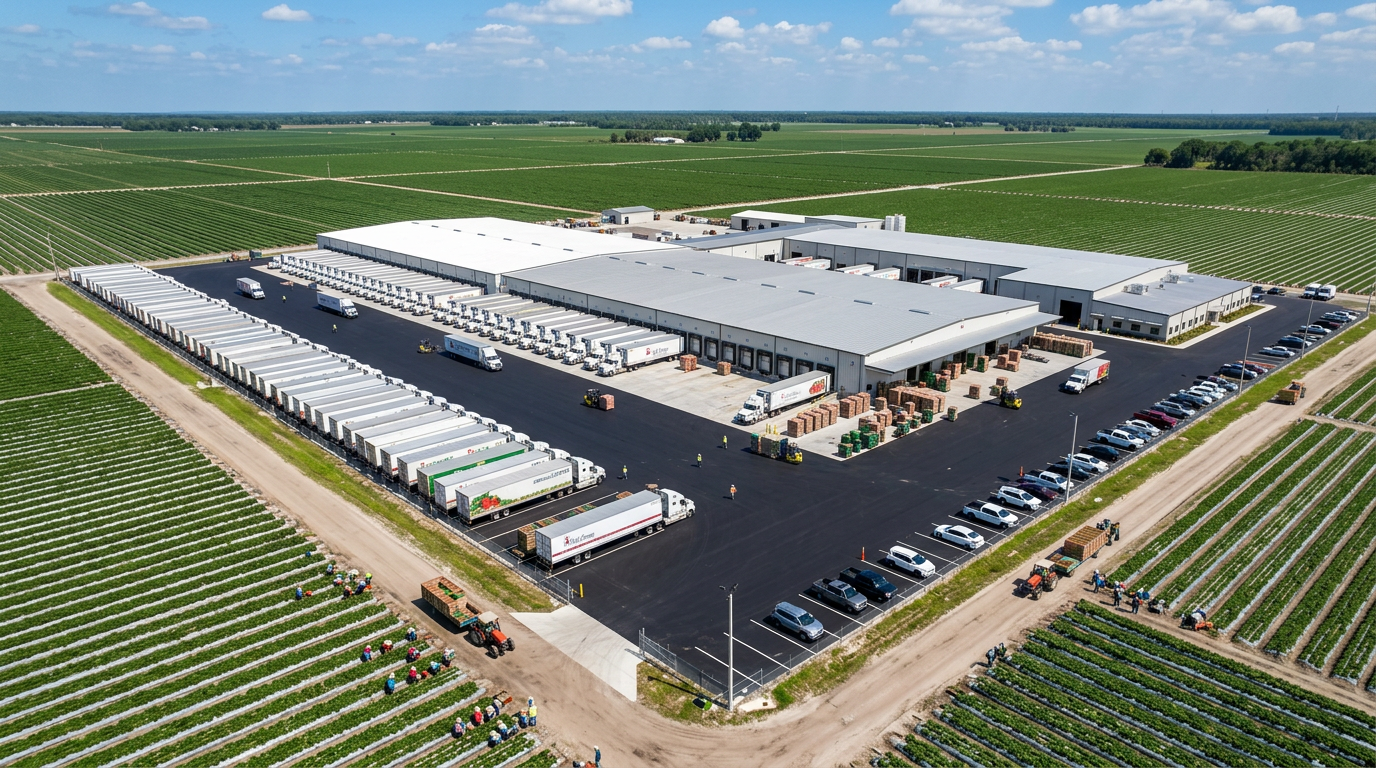
Plant City’s agricultural industry creates unique pavement stresses that many contractors underestimate. During strawberry season, local facilities experience traffic volumes and loading patterns unlike typical commercial properties, requiring specialized engineering approaches.
Seasonal Loading Challenges: Agricultural facilities face extreme seasonal variations that standard commercial paving can’t handle. A strawberry packing facility might handle minimal traffic for eight months, then experience intensive 18-hour daily operations during harvest season. Fully loaded refrigerated trucks create concentrated stress points that can quickly damage inadequately designed pavement.
These facilities typically require 6-8 inches of asphalt with reinforced base sections, compared to the standard 4-inch commercial parking lot design. Loading dock areas need 8-12 inches of aggregate base with asphalt thicknesses often reaching 8 inches in critical areas where heavy agricultural equipment operates.
Distribution Center Requirements: Plant City’s strategic I-4 location has made it a major logistics hub, with facilities handling everything from fresh strawberries to general freight. These operations demand pavement designed for 80,000-pound gross vehicle weights with frequent turning movements and extended standing loads during loading operations.
The humid subtropical climate adds another layer of complexity. Florida’s intense heat and seasonal rainfall patterns affect asphalt performance, requiring higher-grade binders and enhanced drainage systems that many contractors overlook.
Understanding Plant City’s Unique Commercial Paving Environment
Plant City’s commercial paving needs differ significantly from typical suburban developments. The city’s agricultural heritage means many facilities handle extremely heavy loads during strawberry season, while the I-4 corridor location attracts major distribution centers requiring year-round heavy truck access.
Clay Soil Considerations: Plant City’s clay-based soils, common throughout Hillsborough County, can create subgrade stability issues that must be addressed during the design phase. Poor subgrade conditions can undermine even properly designed pavement, making geotechnical analysis crucial for larger commercial projects.
Drainage Requirements: Agricultural operations must handle both Florida’s intense rainfall and equipment washing requirements. Proper drainage design prevents water infiltration that can weaken pavement structure while accommodating runoff from equipment cleaning and processing operations. Facilities require minimum 2% slopes with properly sized inlets, plus consideration for detention requirements under environmental regulations.
Traffic Pattern Analysis: Every commercial project requires traffic analysis specific to the operation. A strawberry processing facility has different requirements than a general distribution center. We analyze expected vehicle types, frequency, and loading patterns to determine appropriate pavement thickness and base requirements for long-term performance.
Materials and Construction Methods for Heavy-Duty Applications
Plant City’s demanding applications require materials and construction methods that exceed standard commercial specifications. The combination of heavy agricultural equipment, intense Florida heat, and seasonal loading patterns demands robust material selection and proven construction techniques.
Advanced Asphalt Mix Design: Heavy-duty applications typically require polymer-modified asphalt or Stone Matrix Asphalt (SMA) in critical areas. These premium mixes provide enhanced rutting resistance and durability under the concentrated loads common in agricultural and distribution facilities.
Loading dock areas and truck turning zones receive special attention with 6-8 inches of asphalt in multiple lifts. The typical design includes 4-inch surface course plus 4-inch binder course, with aggregate base depths of 8-12 inches depending on subgrade conditions and expected traffic loads.
Quality Control Standards: Commercial projects require rigorous quality control to ensure long-term performance. This includes compaction testing to verify proper density, temperature monitoring during placement, and thickness verification throughout the project. NAPA certification standards guide our quality procedures, ensuring consistent results that meet engineering specifications.
Climate-Specific Material Selection: Florida’s climate demands higher PG-grade binders (PG 70 instead of standard PG 64) for better high-temperature performance. Proper aggregate gradation ensures adequate drainage and stability under heavy loads while resisting Florida’s thermal cycling effects.
Construction Process and Project Management
Plant City’s commercial projects require careful planning to accommodate both operational needs and Florida’s weather patterns. Our construction process begins with thorough site analysis, considering soil conditions, drainage requirements, and expected traffic patterns specific to each facility.
Optimal Construction Timing: Florida’s climate creates optimal paving windows, typically April through October when temperatures and humidity levels provide ideal curing conditions. Large commercial projects often require phased construction to maintain facility operations while ensuring quality installation.
We coordinate closely with facility managers to minimize operational disruption while maintaining construction quality standards. This is particularly important for agricultural facilities that must maintain operations during critical harvest periods.
Base Course Preparation: Proper preparation is critical for heavy-duty applications. Base course compaction to 95% standard Proctor density provides the foundation for pavement performance. Inadequate base preparation is a common cause of premature pavement failure in heavy-use applications, making this step crucial for long-term success.
Subgrade Evaluation: Plant City’s clay soils require careful evaluation and often stabilization before paving begins. We recommend geotechnical analysis for larger projects to prevent costly failures and ensure long-term performance under heavy agricultural and commercial loads.
Long-Term Performance and Maintenance Planning
Understanding Florida’s humid subtropical climate helps facility managers plan for long-term pavement performance and budget for necessary maintenance. Plant City’s hot summers and seasonal rainfall create thermal cycling that can accelerate pavement aging without proper initial design.
Climate-Specific Maintenance: Regular sealcoating every 3-4 years protects the asphalt binder from Florida’s intense UV environment and extends pavement life significantly. This preventive maintenance is especially cost-effective for large commercial facilities handling heavy agricultural traffic.
Proactive Care Programs: Agricultural and distribution facilities benefit from proactive maintenance programs. Regular crack sealing, particularly before Florida’s rainy season, prevents water infiltration that can weaken pavement structure. Annual inspections help identify issues before they become expensive repairs.
Heavy-use areas like loading docks may require periodic overlay or reconstruction sooner than general parking areas. Planning for this differential aging helps facility managers budget appropriately and maintain operational efficiency throughout Plant City’s demanding agricultural seasons.
Wells Asphalt Paving Florida understands Plant City’s unique commercial paving requirements, from strawberry processing facilities to major distribution centers along the I-4 corridor. Our expansion from Wisconsin operations brings cold-climate expertise that translates well to Florida’s demanding applications, while our local knowledge ensures proper consideration of Plant City’s specific agricultural and logistical challenges.
We serve Plant City and surrounding communities including Brandon, Lakeland, Dover, Seffner, Valrico, and throughout Hillsborough County. Our commercial project portfolio demonstrates successful completion of agricultural facilities, distribution centers, and industrial operations that demand superior pavement performance under Florida’s challenging conditions.
Ready to discuss your Plant City commercial paving project? Contact Wells Asphalt Paving Florida at (813) 519-4382 or visit www.wellsasphaltpavingflorida.com for a free consultation. We provide detailed proposals that address your operational needs, budget requirements, and the unique demands of Plant City’s agricultural and logistics economy. Let us help you build pavement infrastructure that supports your facility’s success in the Winter Strawberry Capital of the World.

Quality, Dependable Asphalt Paving in Tampa, FL and Nearby Areas
Family Owned and Operated Since 1978
Competitive Prices Free Quotes
(813) 519-4382
Service Area
With locations in Central Florida and Tampa Bay , we provide top-quality asphalt paving. Our service area includes, but is not limited to: Tampa, FL; Carrollwood, FL; Westchase, FL; Riverview, FL; Wesley Chapel, FL; Davis Islands, FL; Harbour Island, FL; Bushnell, FL; and Many More!
CONTACT US
813-293-5975
HOURS
Mon - Sun 7:00 am - 5:00 pm